
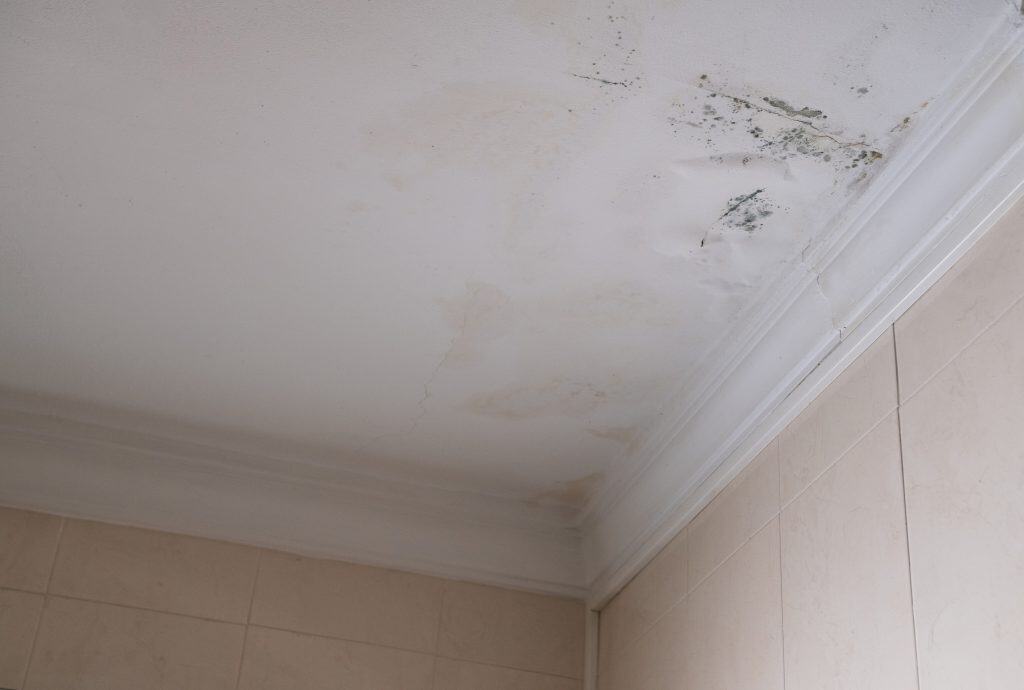
How to Fix Water Stains on Painted Ceilings in Fish Hoek
Brown, yellow or grey marks on a painted ceiling are usually evidence that moisture has reached the ceiling board or plaster. In Fish Hoek homes, these stains commonly appear after Cape winter rain, roof-tile movement, blocked gutters, ageing flashings, plumbing leaks or persistent condensation in poorly ventilated rooms.
The visible stain should not be treated as the entire problem. Water may enter through one part of the roof, travel along a rafter, membrane, pipe or ceiling board and only become visible some distance away. Painting the mark without identifying and repairing the moisture source normally results in the stain returning.
Direct answer: To fix a water stain on a ceiling, first identify and repair the roof, plumbing, waterproofing or condensation problem. Allow the ceiling to dry, confirm that the board remains firm, remove loose paint, treat mould where present, repair damaged areas, apply a suitable stain-blocking primer and repaint the complete ceiling or a logical full section.
Protective Coatings Cape Town follows a diagnosis-and-preparation-first approach to suitable ceiling and interior repainting projects. Our Painters Fish Hoek service supports homeowners dealing with ceiling stains, peeling paint, mould, damp-related defects and interior repainting across Fish Hoek and the wider False Bay painting service area.
What Does a Water Stain on a Ceiling Mean?
A ceiling stain shows where moisture and contamination reached the visible painted surface. It does not necessarily identify the original entry point.
Water moving through a roof or upper floor can pick up dust, timber tannins, rust residue, dirt and other contaminants. When this moisture reaches the ceiling board and evaporates, it can leave a brown, yellow or grey discolouration behind.
The shape and location of the stain provide useful clues, but they should not be used as the only diagnosis. A stain in the centre of a room may originate from a leaking roof valley several metres away. A mark near a wall may be caused by a gutter overflow, parapet defect, roof-to-wall flashing or plumbing pipe rather than a leak directly above it.
Why Fish Hoek Homes Develop Ceiling Water Stains
Fish Hoek homes experience coastal wind, winter rain and changing weather conditions that place pressure on roofs, gutters, flashings and waterproofing details. Wind-driven rain can enter openings that remain dry during light or vertical rainfall.
Local conditions that may contribute to ceiling staining include:
- Cape winter rain driven beneath tiles or into roof junctions
- Strong coastal wind moving or stressing roof components
- Cracked, displaced or ageing roof tiles
- Deteriorated ridge cappings and mortar joints
- Blocked gutters and downpipes
- Ageing or incorrectly detailed flashings
- Leaks around roof valleys, chimneys, vents and wall junctions
- Corrosion around exposed roof-sheet fasteners and metal components
- Cracked parapets and failed waterproofing membranes
- Older ceiling boards carrying damage from historic leaks
- Bathrooms and kitchens with insufficient extraction
- Homes built on slopes or highly exposed elevations
Salt-laden air does not directly create every ceiling stain, but it can accelerate corrosion of exposed fasteners, flashings and metal roofing components. Over time, weakened seals or corroded fixings may allow moisture into the roof structure.
The Most Common Causes of Ceiling Water Stains
Cracked or Displaced Roof Tiles
Roof tiles can crack, shift or become displaced because of age, wind, foot traffic, movement or impact. Even a relatively small gap may admit water during strong wind-driven rain.
Failed Flashings
Flashings seal roof junctions around walls, chimneys, vents and changes in roof direction. Corrosion, cracking, movement or incorrect installation can create water-entry points.
Leaking Roof Valleys
Roof valleys collect substantial volumes of water. Debris, corrosion, cracked materials or defective joints can cause water to overflow or enter beneath adjacent roof coverings.
Ridge-Cap Defects
Cracked ridge mortar, movement and failed junctions may allow water to enter near the highest part of the roof. That moisture can then travel along rafters before reaching the ceiling.
Blocked Gutters and Downpipes
Leaves, dirt and other debris can prevent gutters from draining correctly. Overflowing water may enter below roof tiles, behind fascias or into wall-to-roof junctions.
Roof-Sheet Fasteners and Corrosion
On sheeted roofs, ageing fastener seals, corrosion and movement around fixing points can allow water into the roof space. Painting over corroded fasteners does not necessarily repair the seal beneath them.
Parapet and Waterproofing Defects
Flat roofs, parapets, balconies and roof terraces can leak through cracks, failed membranes, defective cappings, blocked outlets or poorly detailed junctions.
Plumbing and Geyser Leaks
Leaking water pipes, geysers, overflows, bathroom fittings and waste connections can create ceiling stains that look almost identical to roof leaks.
Condensation and Poor Ventilation
Bathrooms, kitchens and laundries produce warm moisture-laden air. Without adequate ventilation or extraction, condensation can settle on cold ceilings and create grey staining, mould and peeling paint.
Historical Water Damage
A repaired leak can leave a permanent stain in otherwise dry and structurally sound ceiling board. This mark may continue showing through ordinary ceiling paint until it is isolated with the correct primer.
How the Position of a Ceiling Stain Helps With Diagnosis
| Stain position or behaviour | Possible cause | What should be inspected |
|---|---|---|
| Near an outside wall or cornice | Gutter overflow, fascia leak, flashing defect or parapet moisture | Gutters, downpipes, wall-to-roof junctions, fascias and parapets |
| Below an upstairs bathroom | Pipe, waste, shower, bath, geyser or waterproofing leak | Plumbing fittings, pipework, waterproofing and bathroom use patterns |
| Below a roof valley | Leaking valley, debris blockage or defective valley material | Valley lining, adjacent tiles, joints and drainage path |
| Close to a chimney or vent | Flashing failure or defective roof penetration | Flashings, seals and surrounding roof materials |
| Around a light fitting or downlight | Water tracking along wiring, conduits or ceiling-board joints | Electrical safety, roof space and water path before painting |
| Appears or darkens after rain | Active roof, gutter, flashing, valley or parapet leak | Roof and building envelope during or shortly after wet weather |
| Changes when plumbing is used | Active plumbing or waste-water leak | Pipes, fittings, baths, showers, basins and geyser components |
| Black or grey speckled growth | Condensation, poor ventilation or persistent dampness | Extraction, ventilation, cold surfaces and hidden leaks |
| Remains dry and unchanged | Possible historic leak already repaired | Board strength, moisture condition and stain-blocking requirements |
These patterns provide guidance rather than certainty. Proper diagnosis may require roof-space access, inspection after rain, plumbing testing or assessment by an appropriate contractor.
Why the Visible Stain Can Be Far From the Leak
Water follows the path of least resistance. Inside a roof structure, it may run along the underside of roof sheets, tiles, membranes, rafters, trusses, pipes or cables.
It can then spread across the top of a ceiling board until it reaches a joint, fixing point or low area where it soaks through. The visible mark may therefore be some distance from the actual defect.
This is why patching the roof directly above the stain does not always solve the problem. The complete water path should be traced where practical.
How to Tell Whether the Leak Is Still Active
Before any ceiling repainting begins, it is important to establish whether the moisture source is still active.
Signs of an Active Leak
- The stain becomes darker after rain
- The edges expand over time
- The area feels damp or unusually cool
- The ceiling board becomes soft, swollen or distorted
- Paint bubbles, flakes or peels around the mark
- A musty smell develops
- Mould appears or spreads
- Insulation or timber above the area is wet
- The stain changes after a bathroom, geyser or plumbing fixture is used
Signs of a Historical Stain
- The mark remains unchanged through wet weather
- The board is dry and firm
- There is no musty smell or growing mould
- No new peeling or swelling develops
- The original leak has been located and repaired
Moisture readings may assist in some cases, but they should be interpreted together with the building condition, weather history and substrate type.
Is a Brown Ceiling Stain Always a Roof Leak?
No. Roof leaks are common, but similar stains can be caused by plumbing leaks, geyser faults, condensation, bathroom waterproofing defects or old water damage.
The timing of the stain is often useful. A mark that changes after heavy rain points towards the roof or exterior envelope. A stain that changes after showering, bathing or using an upstairs fixture may indicate plumbing or waterproofing. Widespread grey or black spotting in a humid room may be related to condensation.
Why Painting Over a Water Stain Usually Fails
Ordinary ceiling paint is designed to provide colour, coverage and finish. It is not necessarily designed to isolate dried water contamination.
Water moving through a ceiling can carry discolouring materials into the board and old coating. These residues may migrate through new water-based paint and cause the brown or yellow mark to reappear.
Painting also fails when:
- The leak is still active
- The board remains damp
- Loose paint has not been removed
- Mould has been covered rather than treated
- The ceiling board has become structurally weak
- The incorrect primer has been used
Applying additional coats of standard ceiling paint may hide the mark temporarily, but it does not reliably isolate severe staining.
Why a Stain-Blocking Primer Is Normally Required
Once the moisture source has been repaired and the ceiling is sufficiently dry, a dedicated stain-blocking or isolating primer may be required. Its purpose is to seal residual contamination so that it does not bleed into the new finish.
The primer should be selected according to:
- The severity and type of staining
- Whether the substrate is ceiling board, plaster or another material
- The condition of the existing coating
- Whether mould, rust or other contamination is present
- The compatibility of the primer and final ceiling paint
Primer should not be applied to an actively wet ceiling. Stain isolation begins only after the source is repaired, the board has dried and unsound material has been removed.
Can Roof Painting Stop the Leak?
No. Roof painting protects and decorates a roof that is already sound, correctly repaired and watertight. It does not replace repairs to cracked tiles, defective flashings, leaking valleys, corroded fasteners, failed waterproofing membranes or structural roof defects.
Painting an actively leaking roof may disguise the problem without correcting the actual pathway. Water can continue moving below or behind the coating and reappear on ceilings and upper walls.
Read more about the correct role of roof coatings on our Roof Painters Cape Town page.
When Ceiling Board Can Be Repaired
A stained ceiling board may be repairable when it is dry, firm, flat and free from significant mould damage. Minor discolouration alone does not automatically require replacement.
A repairable ceiling may need:
- Removal of loose or blistered paint
- Cleaning and mould treatment where necessary
- Minor joint, fastener or surface repairs
- Sanding and surface preparation
- A compatible stain-blocking primer
- Repainting of the full ceiling or logical section
When Ceiling Board Should Be Replaced
Ceiling board may require partial or full replacement when it has lost strength or shape.
Warning signs include:
- Soft or spongy board
- Visible sagging
- Swelling or distortion
- Crumbling material
- Open or failed joints
- Persistent heavy mould damage
- Board pulling away from supports
- Waterlogged insulation resting above the ceiling
Filling and painting a soft or sagging board does not restore its structural integrity. The damaged material should be assessed and replaced where necessary before painting.
Mould, Condensation and Ceiling Discolouration
Leak-related staining and condensation-related mould may look different, but both indicate a moisture problem.
A roof or plumbing leak often produces a defined brown or yellow patch. Condensation more commonly creates widespread black or grey spotting, particularly in bathrooms, kitchens, laundries, cold bedrooms and areas with restricted airflow.
Long-term control may require:
- Improved mechanical extraction
- Better ventilation
- Reduced indoor humidity
- Repair of hidden leaks
- Treatment and removal of mould
- A coating suitable for the room’s moisture conditions
Mould should not simply be painted over. The growth and residue must be treated and removed, and the moisture condition encouraging it should be addressed first.
Our Interior Painters Cape Town page explains our wider approach to interior preparation and repainting.
Electrical Safety Around Ceiling Water Stains
Water near a light fitting, downlight, ceiling fan, smoke detector or electrical point requires caution. Moisture can travel along cables, conduits and fittings, so the visible stain may not show the full extent of exposure.
Any suspected water entry around electrical components should be assessed by an appropriately qualified electrician before painting or ceiling repairs proceed in that area.
Do not assume that a fitting is safe because the light still works. Painting contractors should not perform electrical diagnosis or repairs outside their trade scope.
Step-by-Step Process to Fix a Ceiling Water Stain
- Record the stain. Photograph its size, position, shape and colour. Note whether it changes after rain or plumbing use.
- Identify the moisture source. Inspect the roof, gutters, parapets, flashings, valleys, plumbing, geyser, bathrooms and ventilation as relevant.
- Use the correct trade. Roof, plumbing, waterproofing and electrical defects should be repaired by appropriately qualified or experienced contractors.
- Confirm that the source is resolved. Where practical, monitor the area after later rain or plumbing use.
- Allow adequate drying. Ceiling board, plaster, timber and insulation may take time to dry after the leak has stopped.
- Assess ceiling-board integrity. Replace soft, sagging, mould-damaged or structurally compromised sections.
- Remove loose paint. Scrape or sand blistered, peeling and flaking coatings back to a sound edge.
- Treat mould where present. Use an appropriate treatment and cleaning process before priming.
- Repair the surface. Repair board joints, fastener marks, plaster defects and replaced sections.
- Sand and remove dust. Create a smooth, stable surface suitable for primer.
- Apply a stain-blocking primer. Use a compatible isolating product over the affected area or broader ceiling where required.
- Apply the ceiling finish. Repaint the entire ceiling or a logical full section for uniform colour and sheen.
- Inspect after drying. Check coverage, staining, repaired joints and the overall finish.
Should the Whole Ceiling Be Repainted?
Repainting only the stained patch often leaves a visible difference in colour, texture or sheen. Even when the same paint is used, the older surrounding coating may have faded or accumulated normal surface contamination.
For the most consistent result, the complete ceiling or a logical architectural section is normally repainted after the repaired area has been prepared and stain-blocked.
Common Ceiling-Stain Repairs That Do Not Last
- Painting directly over the stain
- Applying several coats of ordinary ceiling paint
- Assuming every stain is caused by the roof
- Painting the roof without repairing the actual leak
- Repainting before the ceiling is dry
- Painting over mould
- Filling soft or sagging ceiling board
- Ignoring stains near electrical fittings
- Repairing only the visible mark without tracing the moisture source
- Using stain-blocking primer while water entry is still active
- Replacing ceiling board without repairing the leak above it
- Accepting a quotation that does not explain the diagnostic and repair sequence
Which Contractor Should You Call?
| Type of problem | Appropriate trade |
|---|---|
| Broken tiles, flashings, valleys, ridge cappings, gutters or roof structure | Roof contractor |
| Failed membranes, parapets, balconies or flat-roof waterproofing | Waterproofing contractor or suitable specialist |
| Pipes, geysers, waste fittings, baths, showers or water supply | Plumber |
| Water near lights, fans, wiring or electrical points | Qualified electrician |
| Preparation, stain isolation, ceiling repairs and repainting after drying | Painting contractor |
A painter should not disguise a leak that still requires roof, plumbing, waterproofing or electrical attention.
How Long Should a Correctly Repaired Ceiling Last?
Once the moisture source has been resolved, damaged materials have been repaired, the ceiling has dried, staining has been isolated and the correct finish has been applied, the repaired ceiling should perform like other properly prepared interior paintwork.
Its durability will then depend on normal interior conditions and whether new roof, plumbing or condensation problems develop. Regular roof, gutter, plumbing and ventilation maintenance is therefore part of preventing future ceiling stains.
How Protective Coatings Cape Town Approaches Ceiling Stains
Protective Coatings Cape Town is not a lead-generation company. Clients deal directly with an established contractor responsible for assessing and completing suitable painting work.
Our approach includes:
- A diagnostic assessment of visible staining and coating failure
- A written diagnostic report with the quotation
- A clear written scope explaining preparation and repainting
- Full-time employed painters rather than casual subcontracted teams
- A working foreman supervising preparation and quality
- Public Liability Insurance through OUTsurance
- Supplier or manufacturer-backed specifications where applicable
- Honest identification of trade boundaries and project limitations
- Clear recognition that paint does not repair active damp
- Clear recognition that roof painting does not stop active leaks
Related services include Damp Proofing Cape Town, Residential Painting, Commercial Painting and Body Corporate and Estate Painting.
View the complete Cape Town Painting Services directory for all related services.
Painters Serving Fish Hoek and Nearby False Bay Areas
Protective Coatings Cape Town assists with suitable painting projects in Fish Hoek and surrounding False Bay suburbs, subject to project size, access and scheduling.
- Painters Muizenberg
- Painters Simon’s Town
- Painters Kalk Bay
- Painters Glencairn
- Painters St James
- Painters Clovelly
You can also view the complete Cape Peninsula Painting Service Areas directory.
Request a Fish Hoek Ceiling Assessment
Call Protective Coatings Cape Town on 061 235 6768 or use our Contact Us page to request an inspection and written quotation for suitable ceiling repairs and interior repainting in Fish Hoek.
Frequently Asked Questions About Ceiling Water Stains
What causes brown water stains on ceilings?
Brown ceiling stains are normally caused by moisture carrying tannins, dust, rust residue or other contaminants through ceiling board or plaster. The source may be a roof leak, plumbing leak, condensation or older water damage.
Is a ceiling water stain always caused by a roof leak?
No. Plumbing leaks, geyser faults, bathroom waterproofing, condensation and historical moisture can all create similar-looking ceiling stains.
Why does a ceiling stain appear after heavy rain?
A stain that appears or darkens after rain often indicates water entering through tiles, flashings, roof valleys, gutters, downpipes, parapets or other exterior junctions.
Can water travel before appearing on the ceiling?
Yes. Water can move along rafters, membranes, pipes, cables and the top of ceiling boards. The visible stain may therefore be some distance from the actual leak.
How can I tell whether a ceiling leak is still active?
Warning signs include a stain that expands or darkens after rain, damp or soft ceiling board, peeling paint, a musty smell, mould and wet materials inside the roof space.
Can I paint directly over a water stain?
No. The moisture source should first be repaired, the ceiling allowed to dry and the surface assessed. A suitable stain-blocking primer is normally required before repainting.
Why does a ceiling stain come through new paint?
Contaminants left in the ceiling board can bleed through ordinary ceiling paint. The stain may also return when moisture remains active or the surface was repainted before it dried.
What primer should be used over a ceiling water stain?
A dedicated stain-blocking or isolating primer compatible with the ceiling substrate and final paint should be used after the leak has been repaired and the surface is dry.
Must the ceiling be completely dry before repainting?
Yes. Painting damp board can cause poor adhesion, blistering, recurring stains and mould growth.
Can roof painting stop an active leak?
No. Roof coatings protect roofs that are already repaired and watertight. Broken tiles, flashings, valleys, membranes and structural defects must be repaired first.
Can blocked gutters cause ceiling stains?
Yes. Blocked gutters can overflow and force water beneath tiles, behind fascias or into wall and roof junctions.
Can plumbing cause a ceiling stain?
Yes. Leaking pipes, geysers, baths, showers, waste fittings and other plumbing above the ceiling can produce localised stains.
Can condensation cause ceiling staining?
Yes. Poor ventilation in bathrooms, kitchens, laundries and bedrooms can create condensation, grey discolouration and black mould spots.
Should mould be painted over?
No. Mould should be treated and removed, and the moisture or ventilation condition encouraging it should be corrected before priming and repainting.
When should damaged ceiling board be replaced?
Ceiling board should be assessed for replacement when it is soft, sagging, swollen, crumbling, heavily mould-damaged or no longer securely supported.
Can a dry historical stain be repainted?
Yes, provided the original leak has been repaired, the board is dry and firm, loose paint is removed and the stain is isolated with an appropriate primer.
What should I do if water is near a light fitting?
Water near a light fitting, downlight, ceiling fan or electrical point should be assessed by an appropriately qualified electrician before painting or ceiling repairs continue.
Should the entire ceiling be repainted?
Repainting the full ceiling or a logical architectural section normally produces a more consistent colour, texture and sheen than patch painting only the stained area.
How do I request a Fish Hoek painting quotation?
Call Protective Coatings Cape Town on 061 235 6768 or use the Contact Us page to request an inspection and written quotation.